
If your product is a web app in 2026, there is a good chance the UI will be React — and increasingly, Next.js. Staffing that work is one of the highest-leverage engineering decisions a startup or SMB can make. Get it right and features ship weekly. Get it wrong and you inherit a slow, fragile frontend that fights every new request.
This guide covers what "good" looks like, how to screen, realistic rates, and how to put React / Next.js on a company contract so you ship.
What a Strong React / Next.js Engineer Actually Owns
A senior React engineer is not just someone who can map a Figma file to components. They own:
- UI architecture - folder structure, shared components, state boundaries
- Data fetching patterns - Server Components, route handlers, caching, revalidation
- Performance - bundle size, images, fonts, Core Web Vitals
- Accessibility basics - keyboard flows, semantics, focus management
- Delivery - PRs you can review, environments that deploy, handoff you can maintain
Next.js adds more: App Router mental model, server vs client boundaries, SEO/metadata, middleware, and production hosting realities (often Vercel, but not only).
If the brief only says "2 years React experience," you will get people who have used useState. If you need a product engineer, say so — and put the named people on the SOW.
Skills Checklist (Use This in Screening)
Must-have for most product roles
- Modern React (hooks, composition, avoiding prop-drilling chaos)
- TypeScript (not optional for serious codebases in 2026)
- Next.js App Router fundamentals
- CSS that scales (CSS Modules, Tailwind, or a design-system approach — consistency matters more than the brand of tool)
- Git hygiene and readable PRs
- Ability to integrate REST/GraphQL APIs cleanly
Strong signals for senior / lead
- Performance profiling and intentional caching
- Auth flows (sessions, cookies, OAuth) done safely
- Forms, validation, and error states that feel finished
- Testing strategy that is pragmatic (not 0%, not theater)
- Experience shipping to production under changing requirements
Nice-to-have depending on your stack
- React Native or Expo (if mobile is on the roadmap)
- Design system work
- Edge/middleware, i18n, analytics instrumentation
- AI UI patterns (streaming responses, optimistic updates)
Where to Staff the Work
Freelance marketplaces — Fast access, noisy. Use for a short paid trial when the spec is already tight. Filter hard on recent Next.js App Router work, not 2019 Create React App demos.
LinkedIn — Best for warm intros to companies and senior independents. Specific briefs beat "open to work" spam.
Software company pod — Useful when you need React/Next plus API, cloud, or AI under one contract rather than juggling three contractors.
Large agencies — Fine for branded campaigns; often expensive for iterative product work. Compare models in Freelance vs Agency vs Software Company.
India remains a strong market for senior React talent at competitive company rates — see How to Hire Software Engineers in India on a Company SOW.
Rate Ranges (2026)
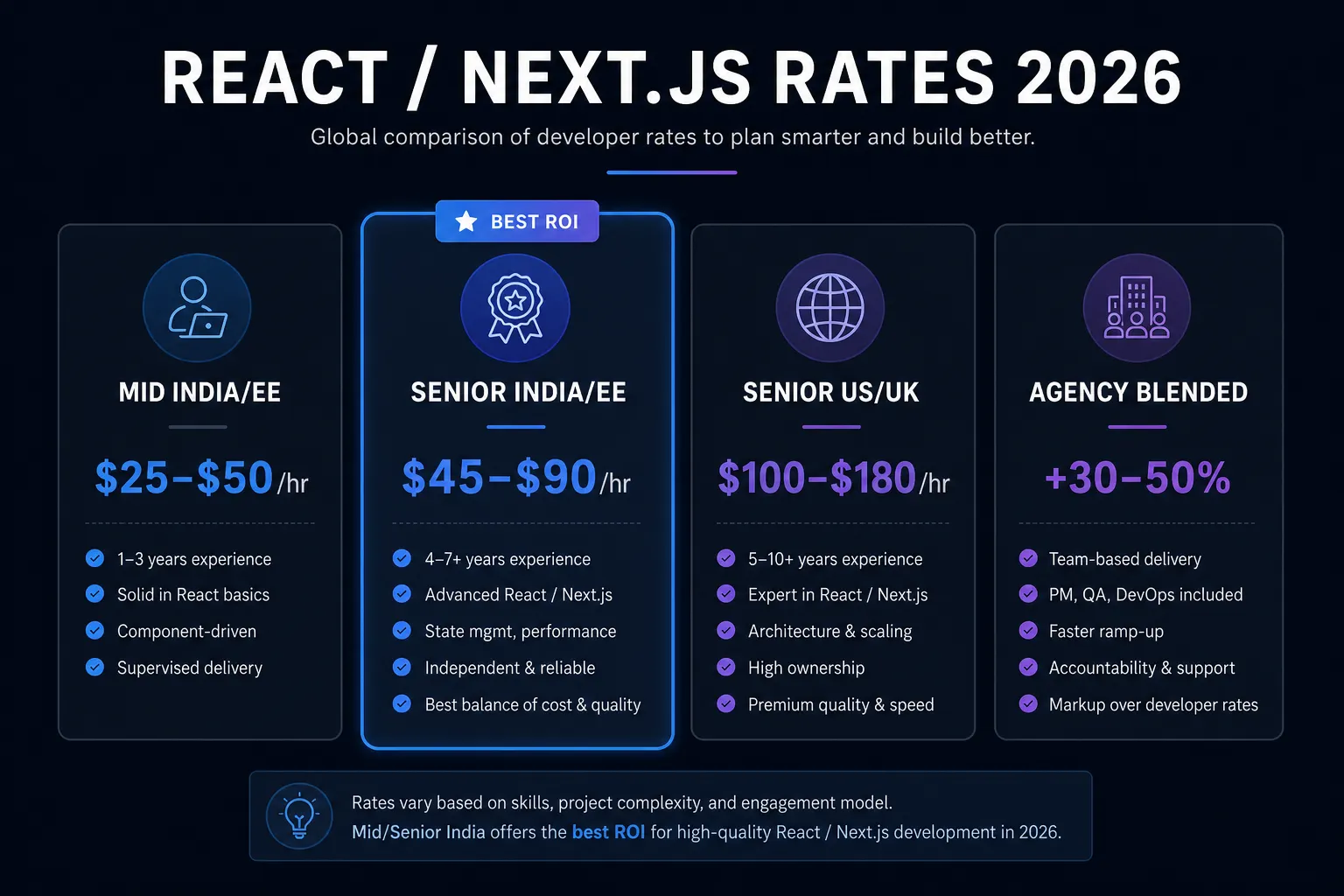
| Profile | Typical hourly | Notes |
|---|---|---|
| Mid React (India / EE) | $25-$50 | Needs clear tickets |
| Senior React / Next.js (India / EE) | $45-$90 | Best ROI for most startups |
| Senior (US / UK contractor) | $100-$180 | Speed + timezone overlap |
| Agency blended | +30-50% | PM + QA often included |
A focused feature sprint on a written SOW is clearer than an open-ended monthly retainer until trust is established.
A Practical Staffing Process (2 Weeks, Not 2 Months)
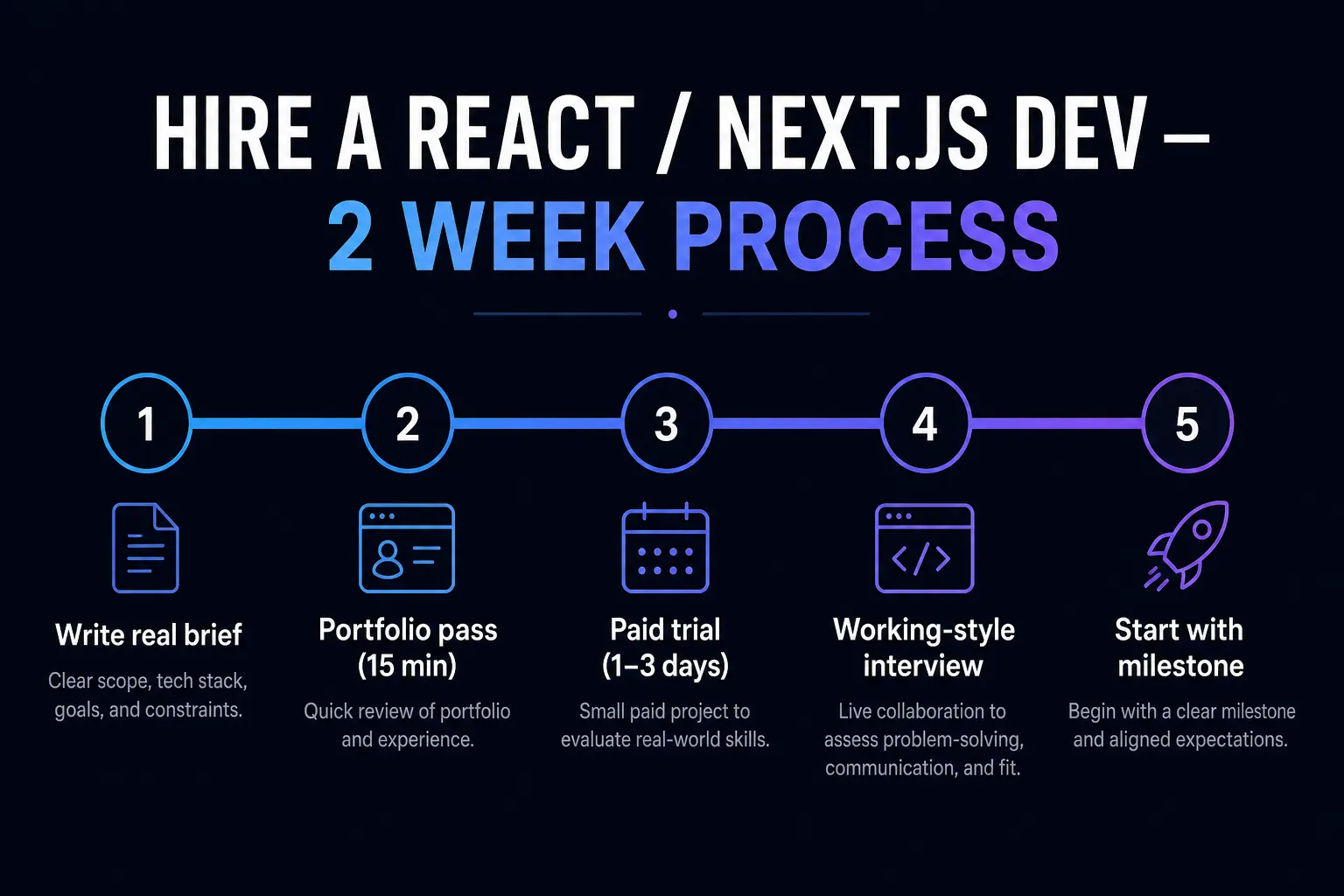
1. Write a real brief
Include stack, repo status (greenfield vs legacy), design maturity, and the first 30 days of outcomes. "Build our app" is not a brief.
2. Portfolio pass (15 minutes)
Look for shipped products, not tutorial clones. Prefer engineers who can explain tradeoffs in a past Next.js app: why server components here, why client there.
3. Paid technical trial (1-3 days)
Give a small vertical slice: a page with auth-gated data, a form, loading/error states, and a deploy. Pay for it. Unpaid weekend take-homes filter for desperation, not skill.
4. Working style interview
Ask how they handle ambiguous tickets, how they communicate blockers, and how they review their own PRs. React skill without communication skill fails remote work.
5. Start with a milestone on a company SOW
Two to four weeks with named people and clear acceptance criteria beats a six-month exclusive on day one.
Interview Questions That Separate Pros from Memorized Docs
- "Walk me through a Next.js page that must be SEO-friendly and personalized after login. What runs on the server?"
- "How do you prevent a dashboard from refetching the same data five times?"
- "Show me a component you regret. What would you change?"
- "How do you decide client state vs URL state vs server state?"
- "What broke in production on a past React app, and how did you find it?"
Listen for specifics. Vague answers about "using Redux for everything" or "memoizing all the things" are smells.
Red Flags
- Cannot explain server vs client components in App Router terms
- Portfolio is only CodeSandbox toys and course certificates
- Pushes a rewrite of your entire stack before understanding the product
- No questions about users, edge cases, or constraints
- Rate far below market with promises of "full AI SaaS in two weeks"
- The sales conversation cannot name who will actually write the code
Greenfield vs Existing Codebase
Greenfield: Prioritize product sense, speed, and clean defaults (TypeScript, linting, CI, sensible folder structure).
Existing codebase: Prioritize debugging skill, empathy for legacy decisions, and incremental delivery. The best Next.js engineer for a messy repo is often the one who improves it without hero rewrites.
Engagement Models That Work
| Model | Best when |
|---|---|
| Fixed milestone (company SOW) | Scope is clear (marketing site, specific feature set) |
| Weekly retainer | Roadmap moves every sprint |
| Embedded part-time | You have a PM/founder who can prioritize daily |
| Company pod | You need frontend + API + DevOps under one owner |
For budget context, pair this with custom software development costs in 2026 and MVP cost in India.
The Bottom Line
Staff React / Next.js for outcomes in production, not keyword matches on a CV. Screen for TypeScript + App Router fluency, pay for a small trial, start with a milestone on a written SOW, and prefer clear communicators over slightly cheaper silent coders.
The right engagement makes the product feel inevitable. The wrong one makes every ticket a negotiation with the codebase.
Need a React / Next.js engineer or a small senior pod? See Myrafy services or contact us for a free estimate.